

Blog


Self-reported Changes in Drinking after GLP-1 Initiation, a GLP-1 and Schizophrenia Analysis, and Quel’s CMO on PBS

October 16, 2026

This week in Quel the Noise: a new analysis of self-reported changes in drinking from RAND, an analysis of GLP-1s and schizophrenia-related health outcomes, and Quel’s CMO Steve Klein, MD, PhD featured on PBS NewsHour.
- Patient-Reported Changes in Alcohol Use Following Glucagon-Like Peptide-1 Receptor Agonist Initiation, by Lori Uscher-Pines et al.
The Summary: This new research letter in JAMA Psychiatry assesses self-reported changes in alcohol use after starting a GLP-1. The team analyzed data from RAND’s nationally-representative American Life Panel survey. Among people who drank alcohol at the time they started a GLP-1, 44.2% reported drinking less alcohol in the first three months after starting a GLP-1. They then looked at characteristics associated with reporting less alcohol use, and found that individuals who screened positive for unhealthy alcohol use were more likely to report reductions in alcohol use (54.1% reported drinking less in this group). In addition, although not statistically significant, individuals with higher incomes and individuals ages 35-49 were more likely to report reductions in alcohol use. The authors caution that recall and social desireability biases may be impacting the findings.
Our Takeaway: Given that there have just been a few studies looking at self-reported behaviors to date (e.g., All of Us Study, a social media analysis from 2023), this is an exciting contribution to the literature. The finding that individuals with a positive screen for unhealthy alcohol use were more likely to report reductions tracks with the RCT data from semaglutide to date, as does the finding that nearly half of participants reported reductions in alcohol use. Their findings that individuals with higher incomes were more likely to reduce their alcohol use is also interesting, given that alcohol use is more prevalent in higher socioeconomic strata. Given the study design, however, causality cannot be inferred, and in addition to the biases mentioned by the authors, there may also be regression to the mean. We agree with the authors that, “greater demand for GLP-1 RAs may be challenging to address without policy changes (e.g., reduction in insurance barriers, greater access to prescribers through telehealth).” - GLP-1 receptor agonist initiation and risk of psychiatric hospitalisation and emergency department presentation in adults with schizophrenia and type 2 diabetes in the USA: an observational cohort study using electronic health records data, by Najmeh Davoodian, et al.
The Summary: In this new study published in Lancet Psychiatry, Davoodian, et al. used aggregate medical record data from ~70,000 individuals with schizophrenia and diabetes to assess whether GLP-1s may impact downstream mental health outcomes. Compared to individuals prescribed no medications, DPP-4 inhibitors and SGLT2 inhibitors (other classess of diabetes medications), individuals prescribed GLP-1s were less likely to have psychiatric hospitalizations and present to the emergency department.
Our Takeaway: There was substantial concern at the beginning of the GLP-1 era about unintended negative psychiatric side effects of these medications and their use in special populations. Several studies in this space, however, have had positive findings and have begun mitigating these concerns (e.g., Taipale, et al., McIntyre, et al. Chen, et al.), This analysis by Davoodian et al. continues to build the evidence base. This also tracks with the finding that there are clinical trials underway assessing the semaglutide and brenipatide for depression and schizophrenia. - The Evidence Suggesting GLP-1s can Curb Drug and Alcohol Cravings, by William BranghamThe Summary: PBS NewsHour aired a 4-part series last week, “GLP-1s Reshaping America.” The third segment featured Quel’s Co-Founder and Chief Medical Officer Steven Klein MD, PhD, FASAM, FAAP, FACMG and his work leveraging GLP-1s off-label for addiction. The segment also featured Dr. Lorenzo Leggio and his pioneering research on GLP-1s for substance use disorders at NIDA.
Our Takeaway: PBS did an amazing job and we are honored to have participated in this segment. Our collaboration with Open Doors Rhode Island has allowed us to be involved with many heroic patients, and this segment gave them the opportunity to tell their stories.
Schedule a free call with a provider

Related Articles
Self-reported Changes in Drinking after GLP-1 Initiation, a GLP-1 and Schizophrenia Analysis, and Quel’s CMO on PBS
A RAND survey finds 44% of drinkers cut back within three months of starting a GLP-1, a Lancet Psychiatry cohort links GLP-1s to fewer psychiatric hospitalizations in people with schizophrenia, and Quel CMO Dr. Steve Klein joins PBS NewsHour’s “GLP-1s Reshaping America.”

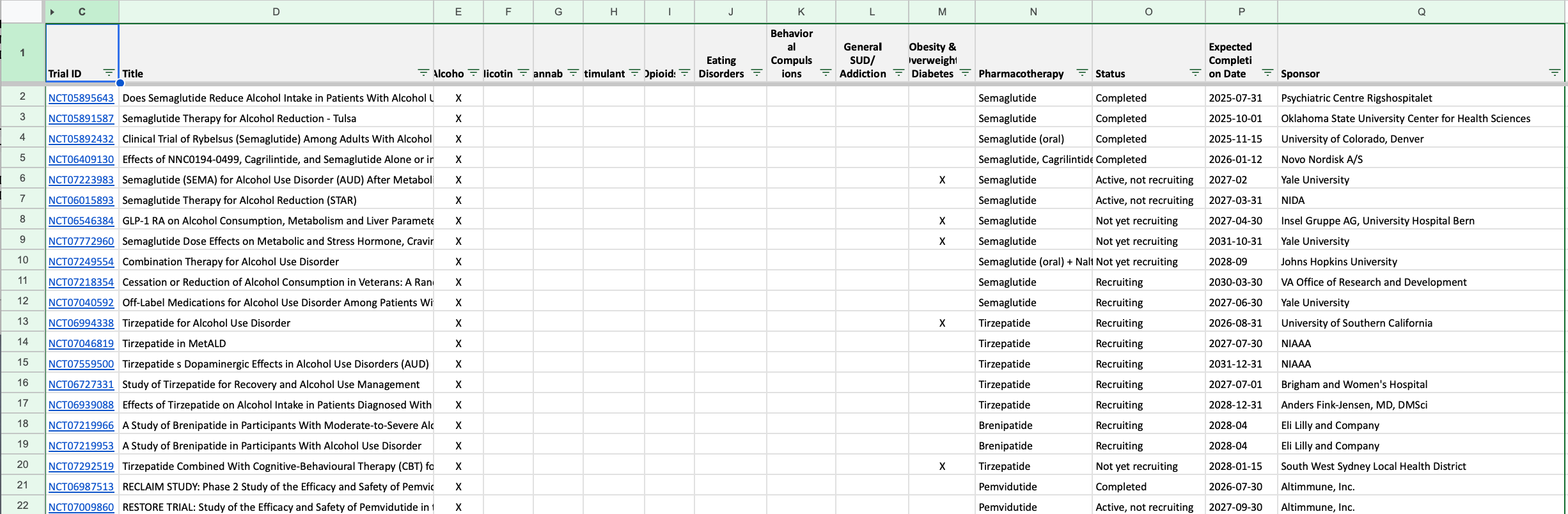
Clinical Trials Assessing GLP-1s and Addiction
At Quel Health, we are actively keeping up with the evolving evidence on GLP-1s and addiction. As part of that effort, we follow the clinical trials that are underway. Here’s an overview of the clinical trials we are tracking on ClinicalTrials.gov, a public registration database that is required for all US trials, as of October 5, 2026, along with our takeaways.